01Model
Build the vehicle model
Geometry, mass properties, and motor data are assembled into a simulation model that mirrors the real vehicle as closely as the design allows.
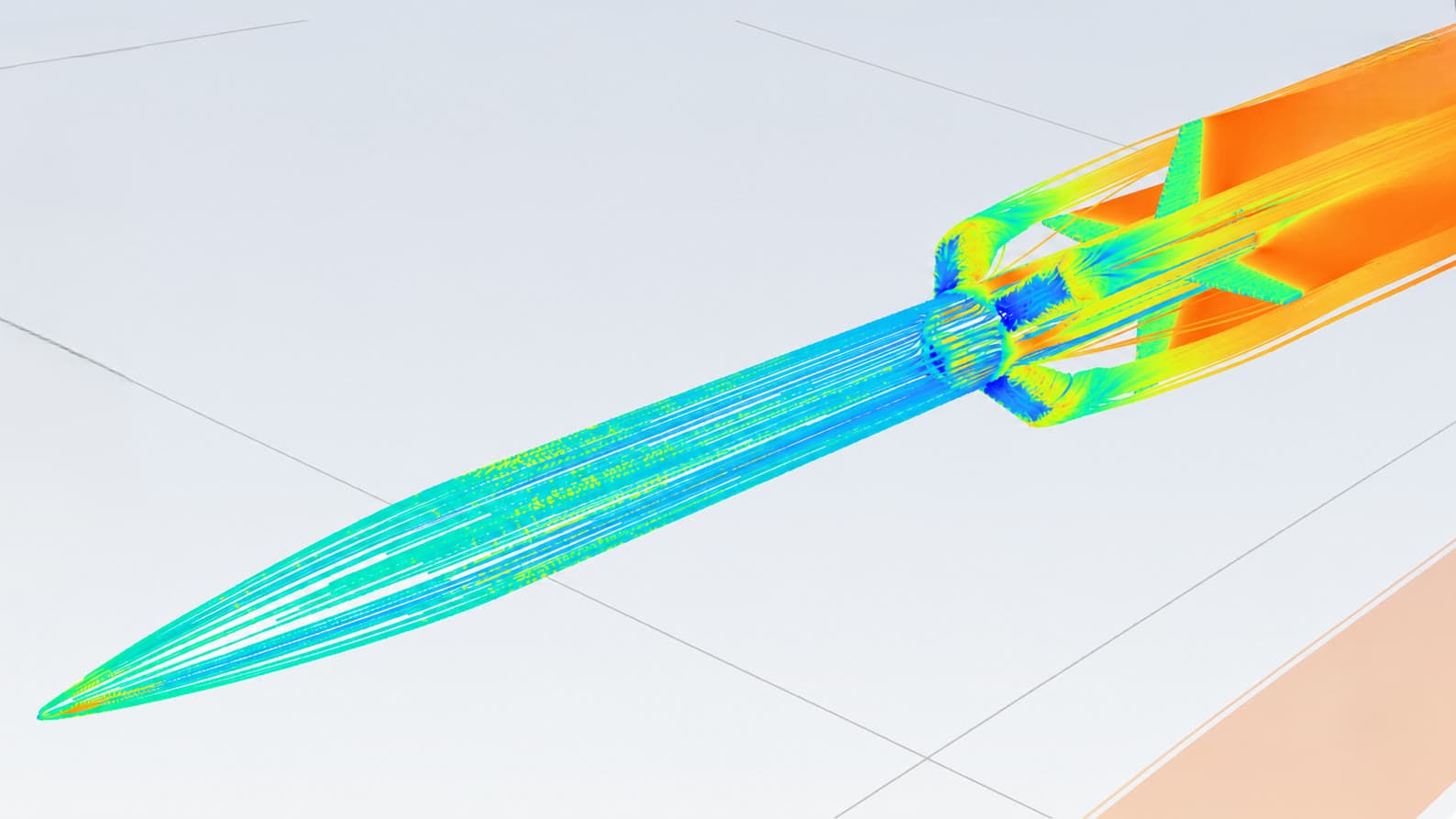
Flight Performance simulates, predicts, and analyzes how DRACO's rockets will behave before launch — so design and launch decisions are backed by analysis rather than assumption. This division leads all major simulation work across the team.
Each stage narrows the uncertainty around how the vehicle will actually fly.
Geometry, mass properties, and motor data are assembled into a simulation model that mirrors the real vehicle as closely as the design allows.
The model is flown in software to predict trajectory, apogee, velocity, and acceleration under expected launch-day conditions.
CFD resolves the airflow, pressure field, and drag around the airframe — including configurations the simpler models can't capture.
Monte Carlo runs and sensitivity studies sweep randomized conditions to bound the range of outcomes, not just the nominal case.
Geometry, mass properties, and motor data are assembled into a simulation model of the vehicle. The model then reports the stability margin the design has to satisfy before it can fly.
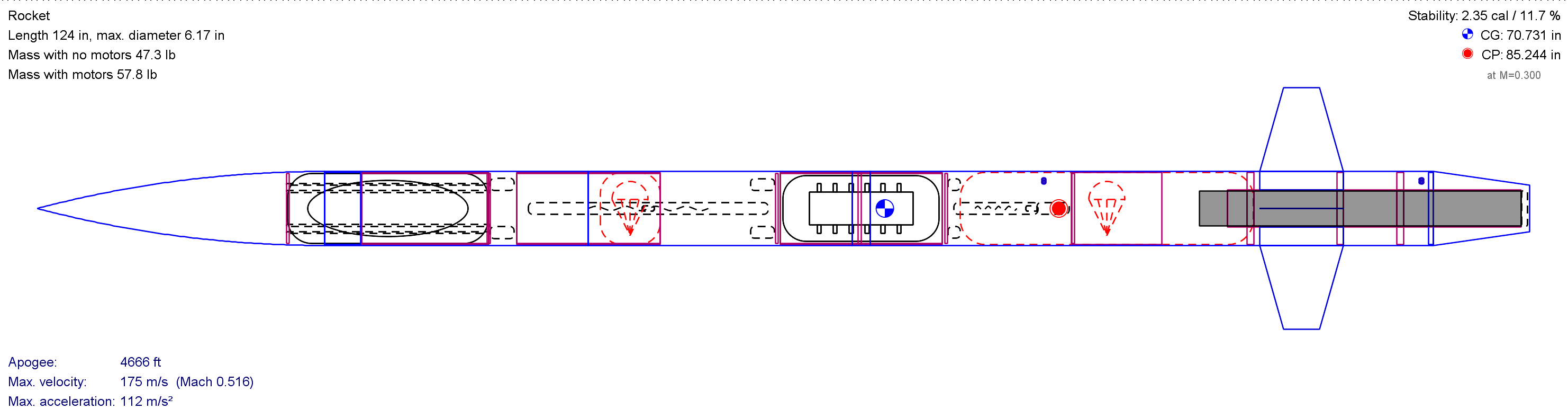
A rocket is stable when its centre of pressure sits behind its centre of gravity — the separation between them, measured in calibers, is the stability margin. Too little and the vehicle won't hold its heading; the margin is checked before anything is committed to manufacturing.
11.7% of body length
from the nose tip
evaluated at Mach 0.300
Model output · not a measured flight result
Simulated flight paths give the team an expected apogee, velocity, and drift envelope — the numbers a launch decision actually rests on.
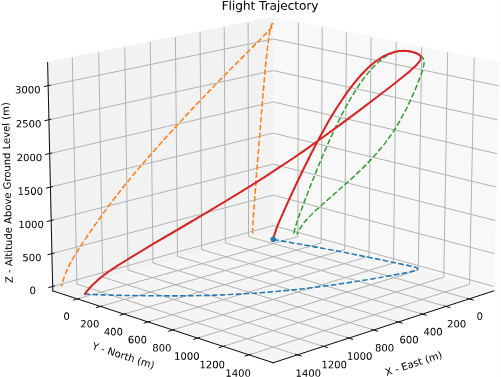
A single simulation gives one answer. Real launch days vary — wind, temperature, motor performance, mass. Monte Carlo analysis sweeps many randomized conditions to produce a range of likely outcomes, and sensitivity studies identify which variables move the result most.
Mach 0.516
Predicted by the Fig. 01 model · not a measured flight result
Computational fluid dynamics resolves the pressure field and wake around the airframe — including the deployed-airbrake configurations that simpler models can't capture.
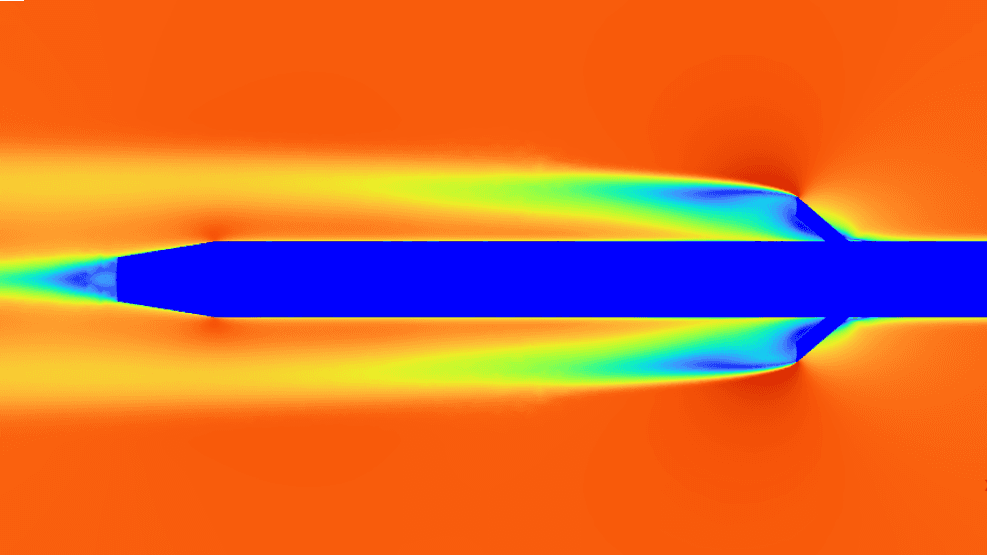
Airbrakes & Apogee Control develops the active drag system that fine-tunes apogee in flight. Flight Performance supplies the simulation and aerodynamic validation that system is designed against — the two divisions work the same problem from different ends.
Predicting where the vehicle goes, how high it gets, and whether it stays pointed the right way.
Simulating the airflow around the rocket to understand drag, pressure distribution, and aerodynamic behaviour.
Running many randomized launch conditions to gauge the range of likely outcomes and which variables matter most.
Turning proposed design changes into predicted performance so the team can choose between them with evidence.
Providing the simulation and aerodynamic validation the Airbrakes & Apogee Control division builds its active drag system against.

/ Confidence Before Flight
Flight Performance turns a design into predicted behaviour — so that by launch day, the team already knows what the vehicle should do.